

New Forest Architecture
Building quietly in the Forest.
The New Forest asks for restraint: low, well-mannered buildings that let the trees, the open Forest and the long views do the talking.
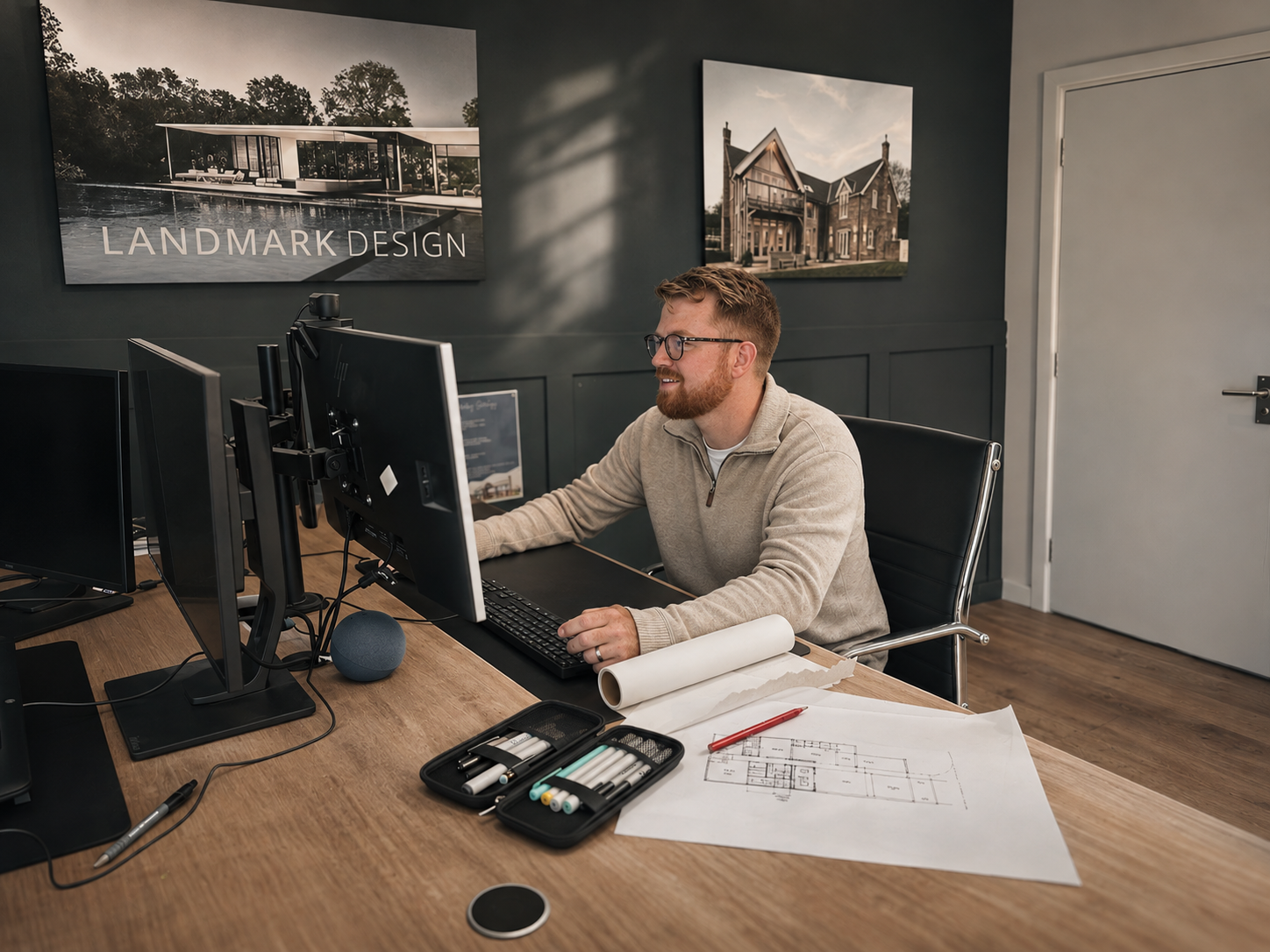
Our story.
Who are we?
Land in the National Park comes with its own rules. The National Park Authority applies its own local plan and design policies, and a site inside the Forest often carries planning history — an agricultural tie, an occupancy condition, or a lawful use that governs what can be built and how large it can be.
We start by establishing that position properly, then design within it: a replacement dwelling that matches the volume it replaces, a house kept low behind existing tree cover, materials drawn from the local palette of timber, brick and tile, and lighting that respects dark skies.
With more than 450 projects behind us, we design new homes, extensions, luxury developments and complex renovations across the Forest, Hampshire and the wider South of England, always in close collaboration with you.

What we do.
From appraisal to completion.
We begin with a proper appraisal of the site — access, levels, trees, drainage, services and planning history — so you know early what the land can carry.
We handle the planning process, including conservation area and listed building consent where it applies, and prepare the drawings, statements and specialist input a sensitive site needs.
From there we take the design through building regulations and technical detailing, and stay close to the build so the finished house matches the drawings.
Selected Projects


Our experience in the New Forest.
One studio.
Bishops Waltham sits between the Forest and the South Downs, so we can be at a site in Brockenhurst, Lyndhurst or Lymington quickly and work alongside local ecologists, arboriculturists and contractors.
10+ years.
Over a decade of work in and around the National Park, where the design has to answer as much to trees, drainage and protected species as it does to the brief.
450+ projects.
More than 450 projects across Hampshire and the South of England, including houses set in clearings and on wooded plots where the building is kept low, dark and secondary to the landscape.