Living Room Design Ideas: How to Create a Space That Really Works
The living room is the heart of the home — a space for family, entertaining, and quiet evenings alike. Here's how to design one that does it all beautifully.
The living room is asked to do a great deal. It needs to be comfortable for a quiet evening in, generous enough for a gathering of friends, calming enough to unwind in, and stimulating enough to hold your attention. Getting it right requires thinking beyond furniture arrangement — it demands a considered approach to light, proportion, materials, and how the room connects to the rest of the home.
Here are the ideas and principles we return to again and again when designing living spaces for our clients.
Start with How You Actually Live
Before thinking about aesthetics, think about use. Do you spend most evenings reading quietly or watching television? Do you entertain frequently, or is the living room primarily a family space? Do you have children or pets whose presence shapes how the room is used?
The answers to these questions should directly inform the design. A family with young children needs a room that is robust, easy to clean, and allows supervision of play. A couple who love to entertain needs flexible seating, good acoustics, and a strong connection to the kitchen or dining space. A single professional who values calm and order will make different choices entirely.
The most successful living rooms are those designed around real life — not around an idealised version of it.
Proportion and Volume
The proportions of a room — its length, width, and crucially its ceiling height — determine everything else. A room with a generous ceiling height feels calm and expansive even at modest square footage. A low-ceilinged room, however large, can feel oppressive.
If you're extending or remodelling, this is the moment to think carefully about section. Could a vaulted ceiling open the room to the roof? Could a double-height void above the staircase lend drama to the approach? Could the removal of a wall between living and dining create the generous, flowing space the house has always been capable of?
We often find that the most transformative interventions are not additions of floor area but changes to the volume and the way spaces connect.
The Fireplace as Anchor
A fireplace — real or decorative — gives a living room its anchor point. It provides the focal element that the seating arrangement orbits, and it brings warmth and atmosphere that no other feature quite replicates. Even in homes with modern heating systems, we almost always recommend incorporating a fireplace or wood-burning stove into the living room.
The design of the chimneybreast and surround should be considered as carefully as any other architectural element. A bold plastered chimneybreast with a simple timber shelf, a flush stone surround with a wide, low opening, a minimal steel insert set into a rendered wall — each creates an entirely different character.
Lighting: Layers and Control
Lighting is the single most important factor in how a living room feels, and it is the most commonly underinvested in. A living room lit only by a single overhead pendant or a set of recessed downlighters will always feel flat and institutional, regardless of how well everything else is designed.
Good living room lighting works in layers. Ambient light provides general illumination — typically from table lamps, floor lamps, and carefully positioned wall lights rather than overhead sources. Task lighting serves specific functions: reading, a desk area, a display cabinet. Accent lighting picks out architectural features or artwork. And atmospheric lighting — candlelight, a flickering fire — creates the quality of intimacy that makes an evening in feel genuinely restorative.
All circuits should be on dimmers, and ideally controlled from a single point at the door.
Materiality: Warmth and Texture
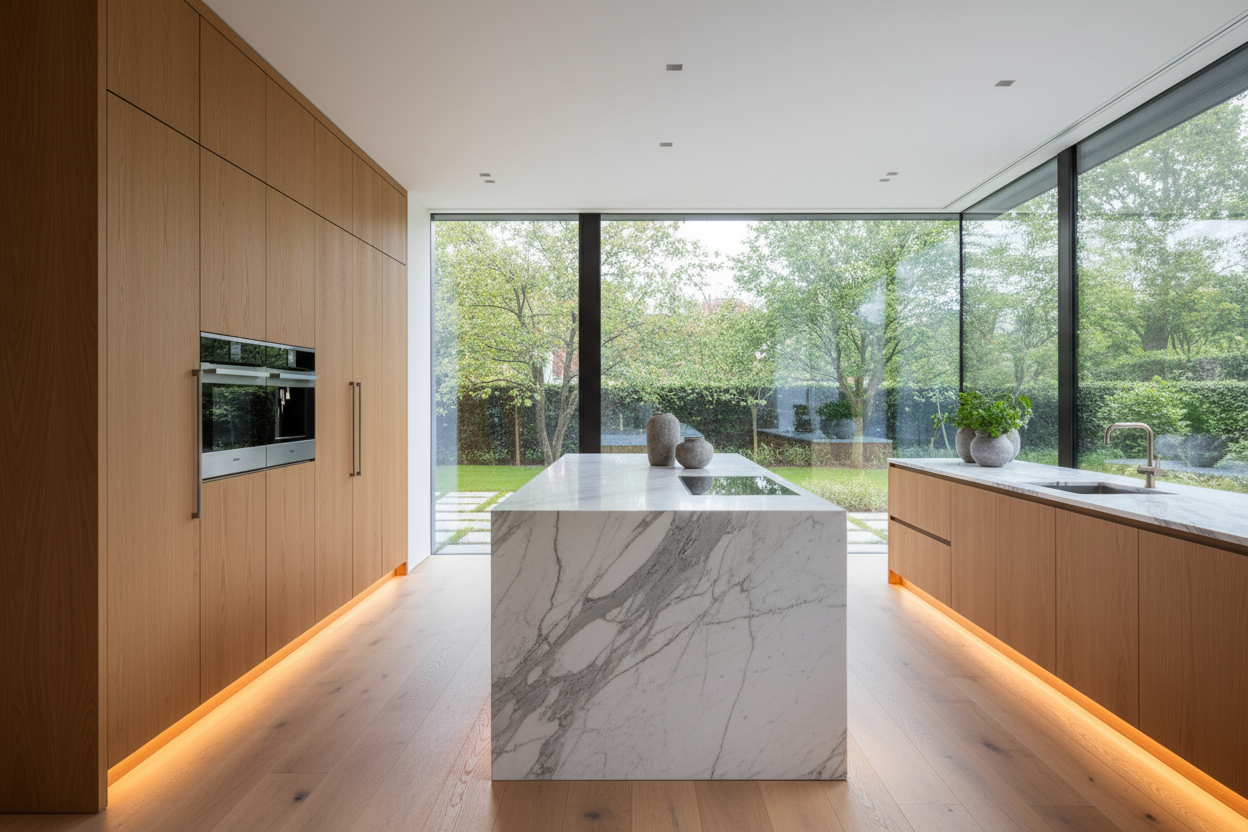
The materials in a living room determine how it feels physically — not just visually. Smooth, hard surfaces (polished stone, glass, metal) feel refined but can be cold. Soft, textured surfaces (timber, wool, linen, lime plaster) feel warm and inviting. The best rooms balance the two.
Natural materials age particularly well in living spaces. A solid timber floor develops a patina over the years that a synthetic alternative never will. A hand-applied lime plaster wall has a depth and variation that painted plasterboard cannot match. These are investments that pay back over decades.
For furniture and upholstery, we favour natural fibres — wool, linen, cotton, leather — over synthetics. They breathe, they age beautifully, and they tend to be more comfortable in both warm and cool conditions.
Colour and Tone
Colour in a living room is a deeply personal choice, but there are principles worth observing. Dark, saturated colours — deep greens, blues, warm charcoals — can feel incredibly enveloping and cosy when used on all four walls and the ceiling. Light, neutral tones feel calm and expansive. The key in both cases is consistency of tone: rooms that mix many different tones and undertones tend to feel restless.
Consider also the effect of daylight on colour. A north-facing room will make cool tones feel cold; warmer hues compensate for the lack of direct sun. A south-facing room can carry cooler tones comfortably. Always test paint colours in the actual room, at different times of day, before committing.
Connection to Outside
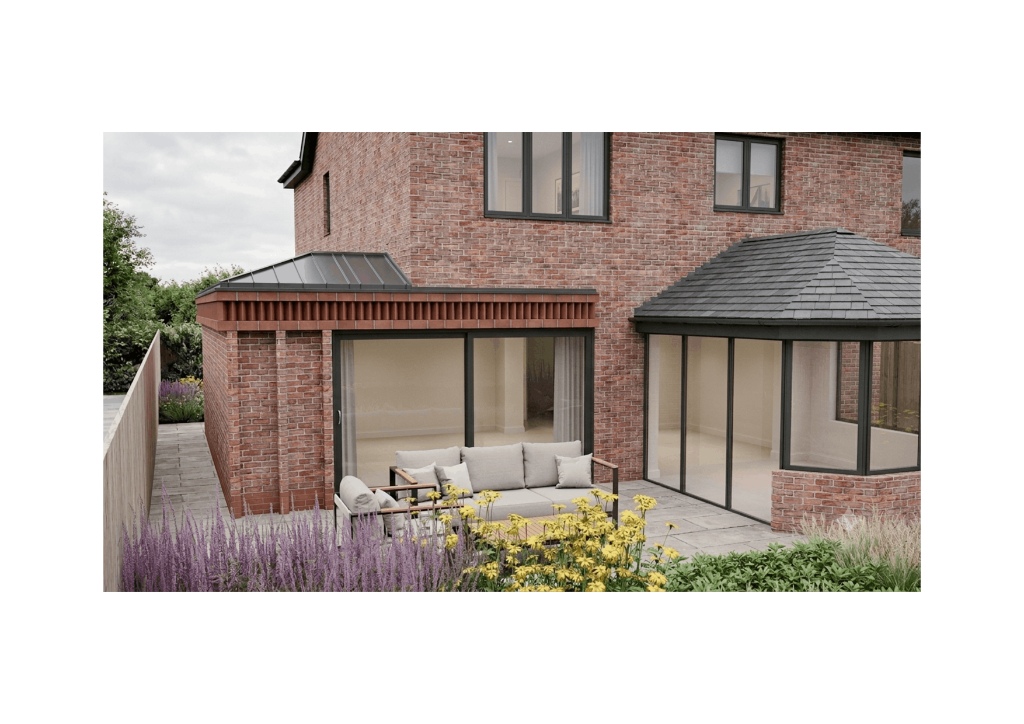
A living room that connects well to the garden or outdoor space feels fundamentally larger and more generous than one that doesn't. Wide sliding or folding doors, a level threshold between inside and out, and continuity of flooring materials between interior and terrace all strengthen this connection.
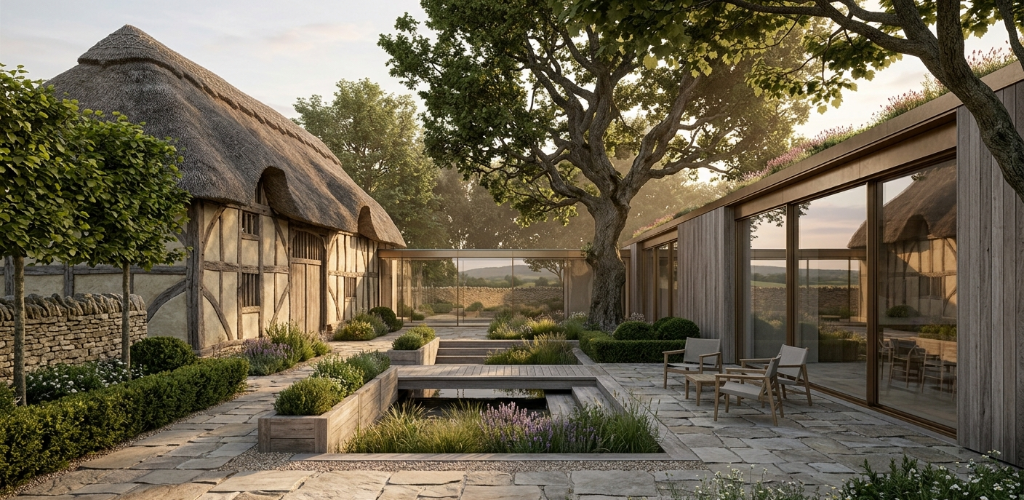
The aspect matters enormously here. A south or west-facing garden connection means the living room catches the afternoon and evening sun — exactly when it's most used. Careful positioning of openings can also frame specific views: a mature tree, a garden wall, a borrowed landscape beyond the boundary.
Bookshelves and Storage
Storage in a living room is a design challenge as much as a practical one. A well-designed bookshelf running the full height of a wall is one of the most beautiful and characterful features a living room can have — it adds depth, colour, and personality in a way that is entirely yours. Bespoke joinery, designed and built to fit the specific dimensions of the room, always looks better than off-the-shelf solutions.
Consider also what you want to hide. Television equipment, cables, games consoles, children's toys — all of these need a home. Cabinets with solid doors, media units with cable management, and dedicated toy storage keep the room calm and ordered without demanding constant tidying.
The Details That Make the Difference
It is often the smallest details that distinguish a beautiful living room from a merely pleasant one. Skirting board profiles. Door handle design. The shadow gap between ceiling and wall. The way a curtain falls. The height at which artwork is hung.
These details deserve attention not because they are expensive — many are not — but because they are cumulative. A room where every detail has been considered feels resolved in a way that is immediately apparent, even if the specific reasons aren't always consciously identified.
If you're planning a living room redesign as part of a larger project, our interior design and architecture team would be delighted to help. Get in touch to start a conversation.