The Self-Build Guide: How to Build Your Own Home in Hampshire
Self-build is one of the most rewarding routes to homeownership — and one of the most misunderstood. Here's what it actually involves.
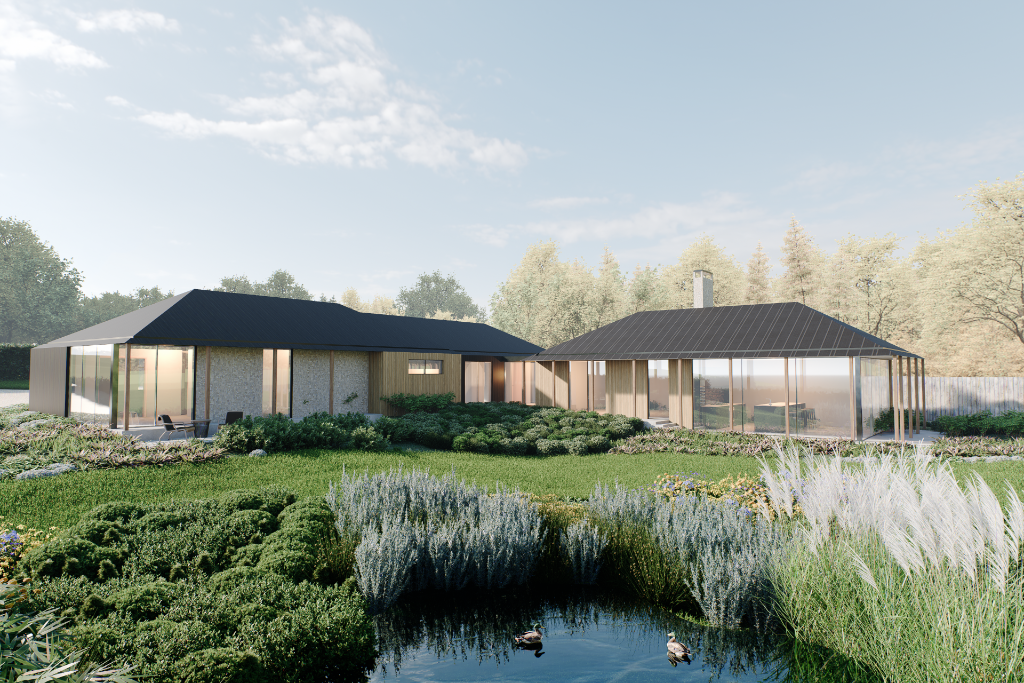
Self-build — designing and building a home entirely to your own specification — is more achievable than most people believe. Every year, around 13,000 self-build homes are completed in the UK, making it the third-largest housebuilding sector after volume housebuilders and housing associations. In Hampshire, with its strong demand for distinctive family homes and a reasonable supply of rural and suburban plots, self-build is a genuinely viable route to owning a home that no developer would ever build for you.
What Is Self-Build?
In its truest sense, self-build means procuring the design and construction of your own home directly — rather than buying from a housebuilder or developer. You are the client, the design brief, and (if you choose) the project manager. You appoint an architect to design the building, a structural engineer to coordinate the structure, and a contractor (or multiple contractors) to build it.
"Self-build" doesn't mean you build it yourself. The term encompasses everything from hands-on direct labour (where the owner genuinely does much of the construction work) to fully managed projects where the owner's main role is design decisions and contract sign-off. Most of our self-build clients fall in the latter category.
Finding a Plot
The first and most challenging step is finding a suitable piece of land. In Hampshire, land for self-build comes from several sources:
Private sales and estate agents. Plots with planning permission are frequently sold through local estate agents, though competition can be fierce and prices reflect the planning value.
Land registries and auctions. Land without planning permission — typically agricultural land, garden plots, or brownfield sites — is often sold at auction. Buying without planning permission carries risk, but prices reflect that risk, and a successful planning application can transform the economics.
The Right to Build register. Since 2016, local authorities in England have been required to maintain a register of people seeking self-build plots, and to allocate sufficient land to meet registered demand. Registering on your local authority's list costs nothing and keeps your interest visible.
Redundant buildings and replacement dwellings. Some of our most interesting projects involve replacing existing, inadequate dwellings with new buildings of significantly higher quality. Policies in many areas actively support well-designed replacement dwellings, particularly where the new proposal is more appropriate to its setting than what it replaces.
The Design Process
For self-build, the design process is essentially identical to any new build project. We begin with a detailed brief — understanding how you want to live, what spaces you need, what character you're after — before moving through concept design, planning submission, and technical design to construction.
The key difference from buying a developer home is freedom. You choose the layout, the materials, the ceiling heights, the window positions, the relationship to the garden. You can design for how your family actually lives — not for how a housing developer imagines a generic buyer might live.
This freedom is exhilarating, but it also requires decisions. Clients who engage deeply with the design process — who are genuinely curious about the choices being made and why — always end up with better homes. The brief is your document, and the more precise and thoughtful it is, the better.
Planning Permission for Self-Build
Planning for self-build new homes follows the same national framework as any residential development. Key policy considerations include:
Settlement boundaries. In most Hampshire local plans, new residential development is directed toward existing settlements. Development outside settlement boundaries requires either a compelling planning justification or a site-specific policy allocation.
Design quality. The NPPF sets a high bar for design quality and requires proposals to be "well-designed." In practice, this means that beautifully designed, contextually sensitive proposals are materially more likely to gain consent than formulaic ones.
Sustainable construction. Local policies increasingly require new homes to meet high energy standards — some authorities now require Passivhaus or equivalent performance as a condition of consent.
Building: Procurement and Contract
Once planning is secured and technical design is complete, the project goes to tender. For self-build, we typically approach three to five carefully selected contractors from our network — builders who we know deliver to the required standard and who are used to working within a properly administered contract.
We recommend a JCT (Joint Contracts Tribunal) Minor Works or Intermediate Building Contract for most residential projects. A properly formed contract protects both parties — it sets out the programme, the payment schedule, and the process for managing changes and disputes. Building without a proper contract is one of the most common causes of self-build projects going wrong.
Costs and Funding
Self-build homes typically cost between £2,500 and £4,000+ per square metre to build, depending on specification and complexity. This is the construction cost only; add professional fees (architect, structural engineer, project manager), planning fees, building control fees, and a contingency of 10–15%.
A significant advantage of self-build over buying new from a developer is VAT. Self-build homes are zero-rated for VAT purposes — meaning you can reclaim the VAT paid on most materials and some services. This is administered through HMRC's self-build VAT reclaim scheme and can represent a very substantial saving on a large project.
Self-build mortgages are a specialist product, available from a growing number of lenders. Unlike a conventional mortgage, funds are released in tranches at defined construction stages, matching the project's cash flow. Arrangement fees and rates have become increasingly competitive as the market has matured.
Is Self-Build Right for You?
Self-build is not for everyone. It requires time, patience, and a tolerance for uncertainty. There will be decisions to make, problems to solve, and moments of doubt. But the rewards — a home that is entirely your own, designed around the way you live, in a location you've chosen — are ones that no developer-built house can replicate.
If you're considering a self-build project in Hampshire and want to understand more about the process, we would be delighted to talk. Get in touch to arrange an initial consultation.