The Case for Sustainable Materials in Residential Design
How specifying responsibly sourced, low-carbon materials can enhance both performance and beauty.
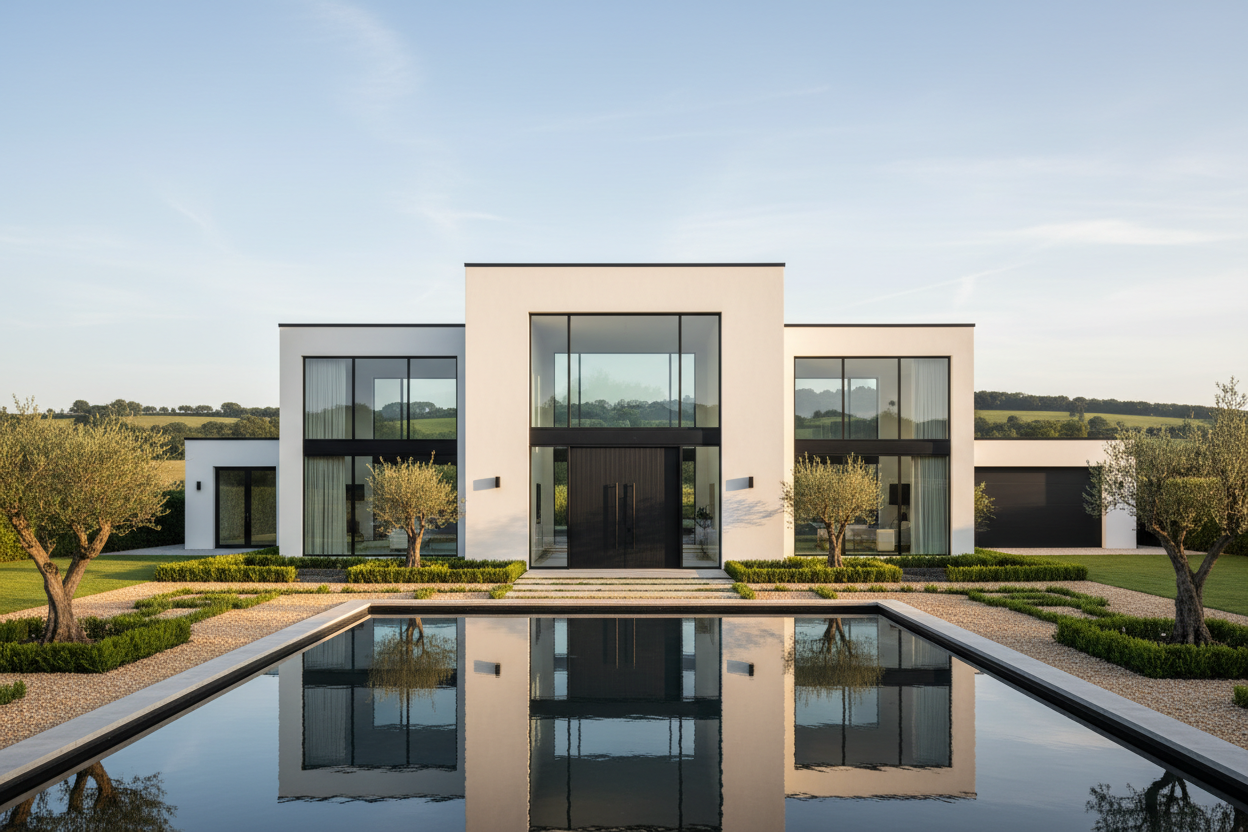
There's a persistent misconception that sustainable design means compromise — that choosing low-carbon materials means accepting something lesser. In our experience, the opposite is true. The most beautiful buildings we admire are almost always made from honest, natural materials: stone, timber, lime, clay. These happen to be among the lowest-carbon options available.
Embodied Carbon vs. Operational Carbon
When we talk about a building's environmental impact, it's useful to distinguish between two types of carbon. Operational carbon is what the building uses day-to-day — for heating, cooling, lighting. Embodied carbon is everything locked into the materials themselves: their extraction, manufacture, transport, and eventual disposal.
For a long time, the industry focused almost exclusively on operational carbon. But as buildings have become more energy-efficient, embodied carbon now represents a much larger share of a project's total footprint — often 50% or more over a building's lifetime. This is where material specification matters most.
Materials We Favour
Timber is the most obvious choice. When sourced from certified, sustainably managed forests, it sequesters more carbon than it emits during manufacture. Cross-laminated timber (CLT) and glulam structural elements are increasingly viable alternatives to concrete and steel for residential projects.
Lime — used in lime mortar, lime plaster, and lime render — is a traditional material with remarkable properties. It's breathable, allowing moisture to move through walls without causing damage, and it actually reabsorbs CO₂ as it cures and weathers over time. For any heritage work, it's non-negotiable.
Reclaimed materials carry essentially zero embodied carbon. We frequently specify reclaimed bricks, stone, and timber, and — when done well — they bring a character and warmth that new materials simply can't replicate.
Natural insulation materials such as wood fibre, sheep's wool, and hemp offer excellent thermal performance with a fraction of the environmental impact of synthetic alternatives.
The Design Opportunity
Beyond the environmental argument, there's a purely aesthetic one. Natural materials age beautifully. A lime-rendered wall develops a subtle patina. Timber weathers to silver. Stone gets richer with time. The buildings we're most proud of are the ones that will look better in 50 years than they do on completion day.
Sustainable specification isn't a constraint on design — it's an invitation to design more thoughtfully.