Wiltshire Vernacular: Stone, Flint, and the Materials That Define a County
From sarsen stone to Chilmark limestone, Wiltshire's building materials tell the story of its landscape. Understanding them is essential to designing well here.
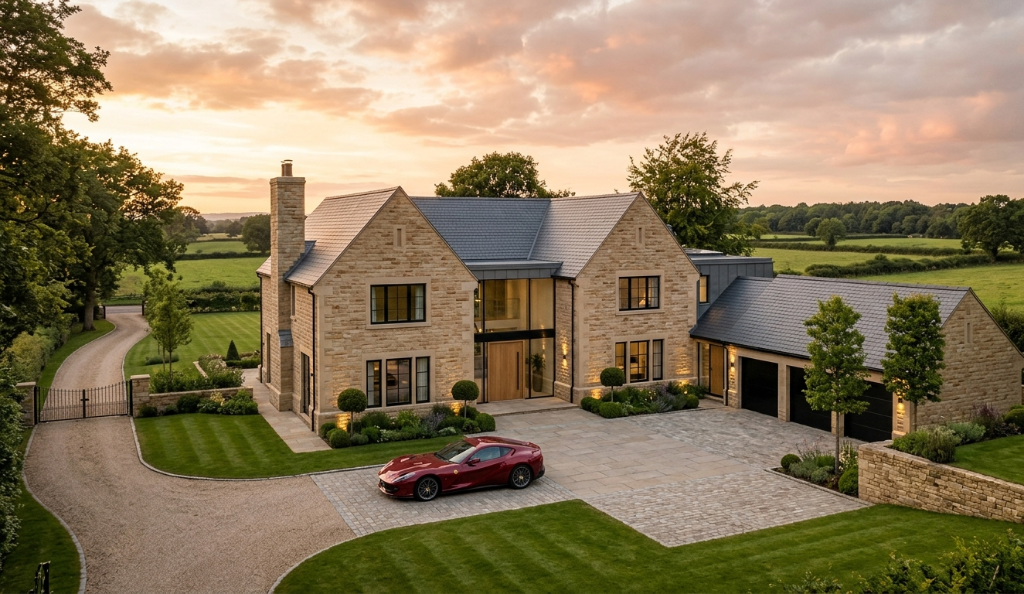
If you drive through Wiltshire from north to south, you'll see the county's geology written into its buildings. In the north, around Malmesbury and the southern Cotswolds, the warm honey-coloured oolitic limestone that characterises the Cotswold villages appears in walls, roofs, and boundary treatments. In the centre, around Marlborough and the Vale of Pewsey, sarsen stone — the distinctive grey-brown sandstone used at Stonehenge and Avebury — appears in field boundaries, barns, and cottages. In the south, around Salisbury and the Chalke Valley, Chilmark limestone and greensand give the villages a different character again.
Understanding these materials — where they come from, how they age, and how they relate to one another — is not an academic exercise. It is fundamental to designing buildings in Wiltshire that feel as though they belong here.
Sarsen Stone
Sarsen stone is Wiltshire's most distinctive building material. Formed around 50 million years ago as a silcrete duricrust — layers of sand cemented by silica into extraordinarily hard, dense blocks — sarsens have been used as building stone in Wiltshire since the Neolithic period. The great megaliths at Stonehenge and Avebury are sarsen, and countless smaller buildings across the county — farmhouses, barns, boundary walls — are built from the same material.
Sarsen is dense, durable, and resistant to weathering. It has a grey-brown colour that varies with the light, sometimes reading as cool grey, sometimes warm honey. It doesn't dress easily — unlike limestone, it resists the chisel — which means that sarsen walls tend to be rougher, more irregular, and more textural than their Cotswold stone equivalents. This texture is part of its character, and it's one of the things that gives sarsen buildings their particular presence in the landscape.
When we specify stone for new buildings in the Marlborough area, we look first at what the local geology provides. Importing stone from elsewhere is occasionally necessary, but the best results almost always come from using the same material that has always been used here — the material that the landscape itself offers.
Chilmark Limestone
Further south, around Salisbury, Chilmark limestone is the dominant building stone. Quarried from the Chalke Valley since medieval times, it is a creamy-white, fine-grained stone that was used in the construction of Salisbury Cathedral itself. Chilmark limestone is softer and more easily worked than sarsen, lending itself to finer detailing — quoins, window surrounds, copings — that sarsen doesn't easily accommodate.
The Chilmark quarries are still operational, producing stone for conservation and new build projects throughout the south of the county. It is, genuinely, a local material in the fullest sense — extracted, processed, and used within a few miles of the quarry.
Flint
Where the chalk downland breaks the surface, flint is ubiquitous — and in parts of Wiltshire, particularly the chalk valley villages, it is the dominant walling material. Knapped flint (split to reveal the dark, glassy interior) produces walls of extraordinary beauty: dark, reflective surfaces set into pale lime mortar, with a quality of depth and variation that no other walling material quite achieves.
Flint is most commonly used in combination with stone — flint panels within stone dressings, flint walls with stone quoins and window surrounds — creating a pattern of dark and light that is distinctive to the chalk landscape villages. Working with flint requires specialist skill, and the quality of the flint-knapper's work is visible in every finished wall. It is a craft that is still practiced in Wiltshire, and it is one that we draw on for projects where flint is the appropriate material.
Brick
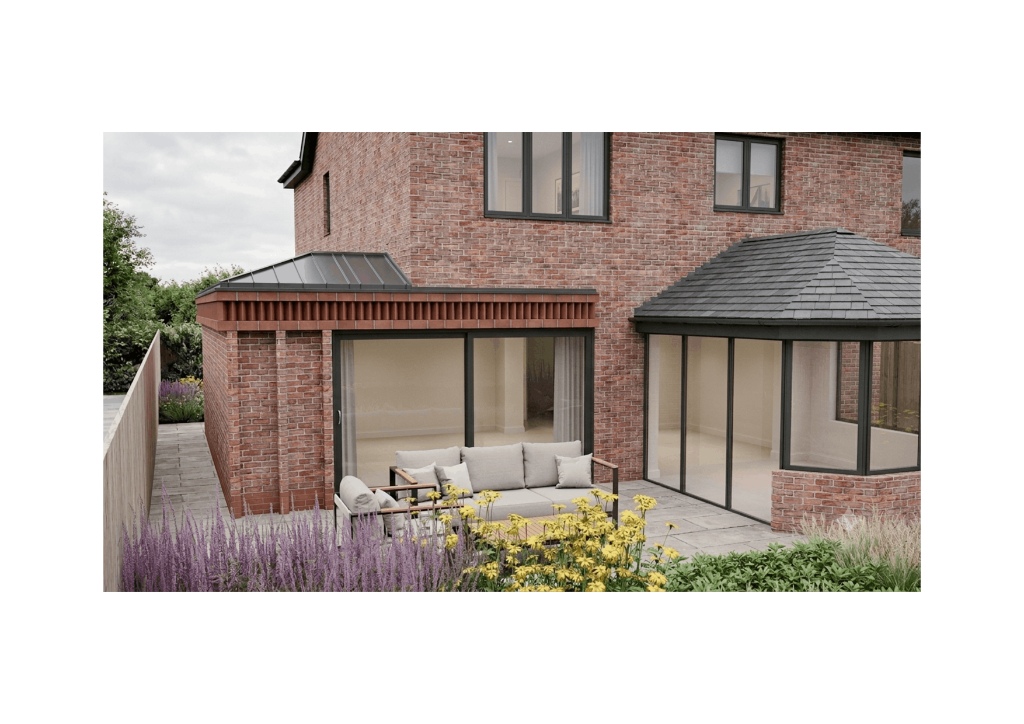
Brick becomes more prominent in Wiltshire as you move east toward the Hampshire border — reflecting the availability of brick clay rather than building stone. Marlborough's high street, famously wide and colonnaded, is predominantly brick-built, with only the occasional stone facade among the predominantly red-brick Georgian and Victorian frontages. The brick of this area is typically a warm, soft red — quite different from the harder, darker brick of the Home Counties — and it weathers to a mellow orange-brown that sits beautifully against the chalk landscape.
In the villages around Marlborough — Ramsbury, Aldbourne, Burbage — brick and flint frequently appear together, with brick dressings around flint panels, or flint ground floors supporting brick upper stories. This combination is one of the most characteristic treatments in the area, and it's one we return to frequently in our design work.
Thatch
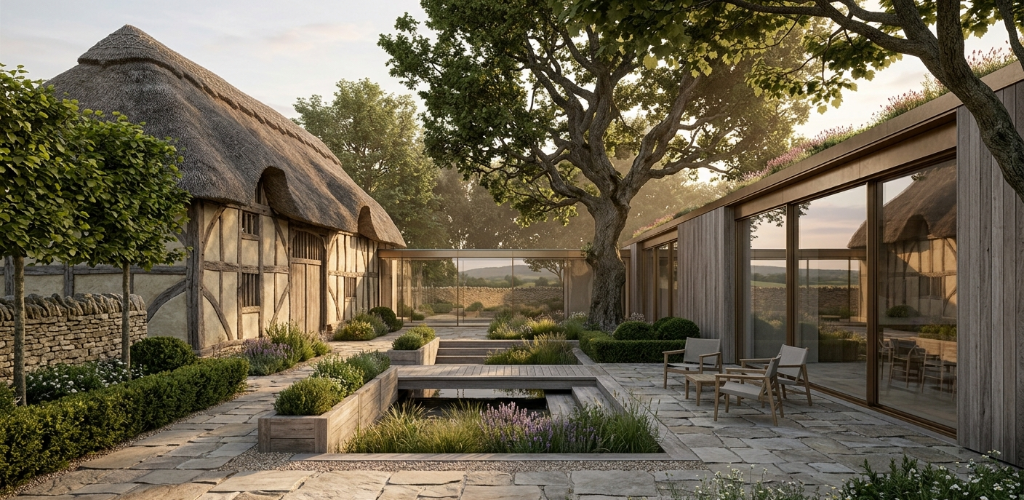
Thatch is the roof material of the Wiltshire village imagination — and while it is far less common than it once was, it remains an important part of the county's architectural character. Long straw thatch (using wheat straw in long bundles, producing a softer, more textured finish) and water reed thatch (using reeds from Norfolk or Dorset, producing a harder, more formal surface) are both found in Wiltshire, though the balance tilts toward long straw in the Marlborough area.
Thatch is a specialist material requiring specialist maintenance, and its cost and insurance implications make it a significant commitment for any homeowner. But in the right setting — a cottage in the Vale of Pewsey, a farmhouse on the edge of Savernake Forest — it is irreplaceable. No other roof material has its texture, its depth, or its organic relationship to the landscape.
Designing with Local Materials
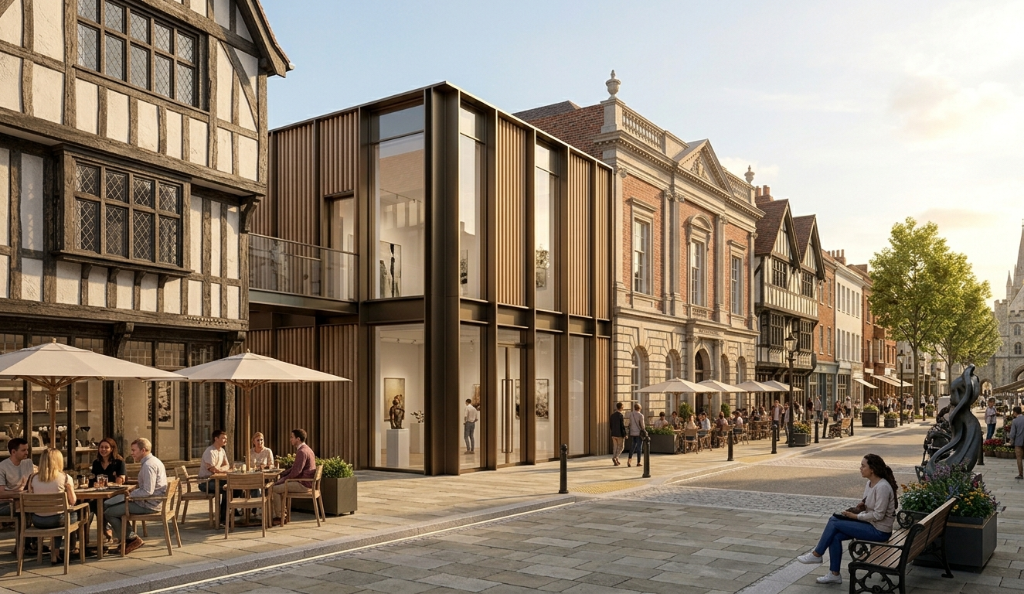
When we start a project in Wiltshire, the first question we ask is: what materials belong here? The answer is almost always written into the landscape and the existing buildings that surround the site. The challenge — and the opportunity — is to use those materials in a way that is clearly contemporary while being genuinely respectful of the local building tradition.
A new house in the Vale of Pewsey might use sarsen stone at ground floor and timber boarding above, with a clay tile roof that echoes the barns in the surrounding fields. An extension to a flint cottage might use flint again — but detailed differently, with deeper reveals or a different coursing pattern that distinguishes the new work from the old. The principle is not pastiche but conversation: new buildings that speak the same material language without repeating the same sentences.
We find this work deeply rewarding. Wiltshire's material palette is rich, varied, and genuinely local — and designing with these materials connects every building we do here to the deeper history of the landscape it occupies.
If you have a project in Wiltshire and would like to talk about materials and character, we'd be delighted to discuss it. Get in touch to arrange a consultation at our Marlborough studio.